 Seven
Progressions to Get Your Summer Writing Underway
Seven
Progressions to Get Your Summer Writing UnderwayWritten by Gary Ewer
Follow Gary on Twitter
Summer is a great time to write songs. Especially for those of us in the northern hemisphere, we get out of the house a lot more, and there's a lot more that inspires us. But if you find it hard to get past the chord progression stage, try these progressions.
The first progression uses what's called a borrowed chord. In major keys, the chord built on the second note of the scale is usually a minor chord. In minor keys, the chord based on that note is usually diminished. You can "borrow" that chord from the minor key and use it in major; it creates a sound best described as melancholy or meditative:
1) C Ddim/F C Ddim/F C/E Am Dm G C
The next set of progressions uses secondary dominant chords. For our purposes here, a secondary dominant means that you've taken a chord that's normally minor, and made it major. It operates as a secondary dominant particularly if the root of the chord that follows it is a 4th higher (or a 5th lower):
2) C A Dm G7 C
3) C F E7 Am D7 G C
4) C D7 G7 Am D7 G C
These next chords a type of chord called "augmented - 6" chords. You build them on the lowered-6th degree of a scale, and they have the same structure as a basic dominant-7th chord. For example, if you're in C major, an augmented 6th chord would include the notes: Ab-C-Eb-F#. That F# is, enharmonically, the same as a Gb, making that chord an Ab7. It should resolve, however, to G:
5) C Am Ab7 G C
6) C F F/A Ab7 G Am
7) C E7 A Ab7 G C
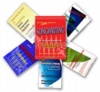
If you're looking for more chord progressions, "Essential Chord Progressions", "More Essential Chord Progressions", and "Chord Progression Formulas will give you dozens and dozens of progressions you can use as is, or modify to suit your new song. Read more about those downloadable e-books here.
 FREE OFFER:
Gary's newest
e-book, "The Essential Secrets of
Songwriting- Chord Progression Formulas" is being offered for free when
you purchase any other of his songwriting e-books. Let these six e-books show you every aspect of how to write great songs!
Read more..
FREE OFFER:
Gary's newest
e-book, "The Essential Secrets of
Songwriting- Chord Progression Formulas" is being offered for free when
you purchase any other of his songwriting e-books. Let these six e-books show you every aspect of how to write great songs!
Read more..Post a Comment on this article
copyright ©2009 Pantomime Music Publications
P.O. Box 31177 Halifax, Nova Scotia Canada B3K 5Y1
contact Gary Ewer: gary@pantomimemusic.com